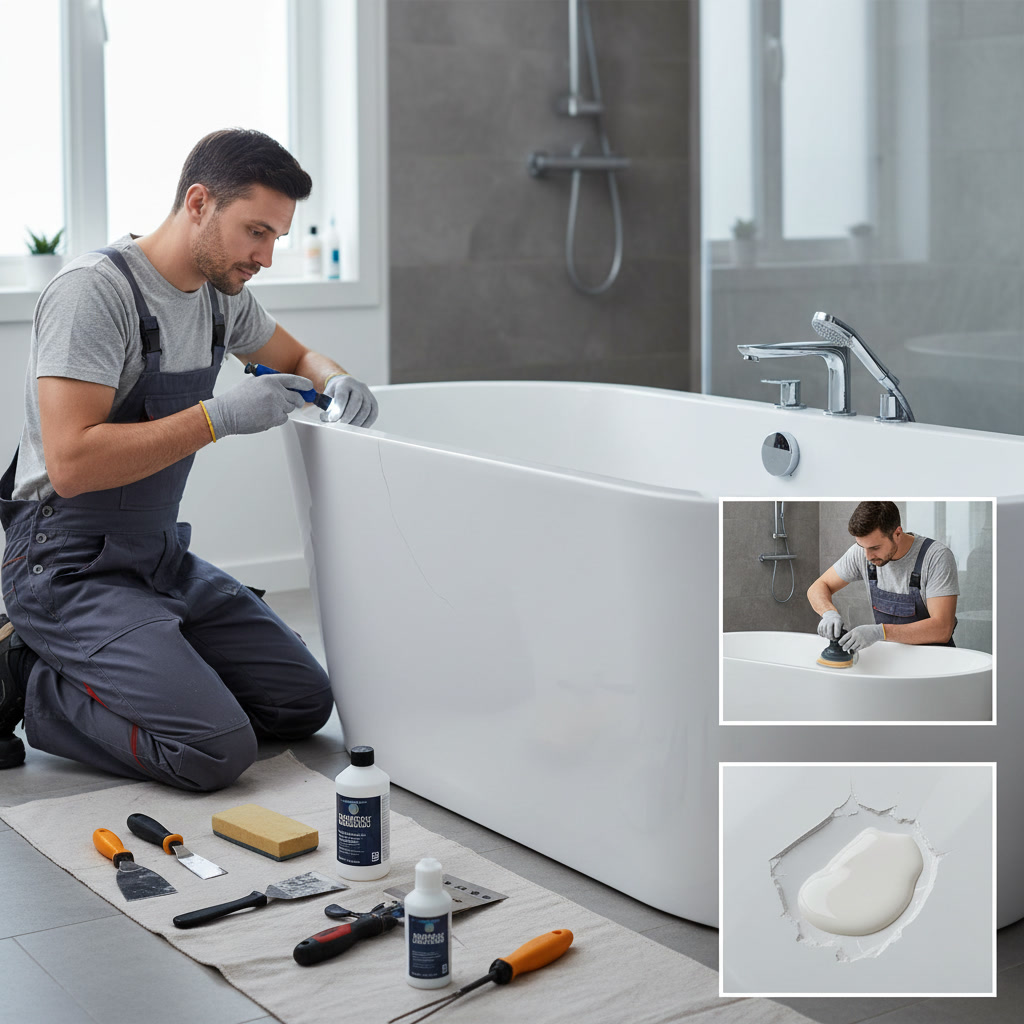
The bathtub repair process typically unfolds in five distinct phases: initial assessment, damage evaluation, surface preparation, repair execution, and final curing. Most professional repairs take between three to six hours for standard issues like cracks, chips, or surface deterioration, though complex problems involving plumbing or structural damage may require multiple visits. A qualified technician will diagnose the specific problem, recommend the appropriate solution, and restore your tub to full functionality using industry-standard techniques and materials.
Why Your Bathtub Shows Signs of Damage Over Time
Bathtubs endure constant exposure to water, temperature fluctuations, cleaning chemicals, and physical impact. Porcelain and fiberglass surfaces gradually develop microscopic stress points that expand into visible cracks or chips. Hard water deposits create rough patches that trap moisture and accelerate deterioration. Even high-quality tubs installed 15 to 20 years ago show wear simply from daily use.
The finish on most residential tubs consists of a glazed layer over a substrate material. When this protective coating breaks down, water seeps underneath and compromises the structural layer. Small chips around the drain or faucet area often signal the beginning of more extensive problems if left unaddressed.
Common Tub Problems That Require Professional Attention
Surface cracks represent the most frequent repair request. These hairline fractures usually start near stress points like the drain assembly or where the tub meets the wall. Without intervention, they widen and allow water to penetrate the subfloor, potentially causing thousands of dollars in hidden damage.
Chips and gouges occur from dropped objects or improper cleaning tools. A small chip measuring just half an inch across can expose the underlying material to rust and decay. Discoloration and staining indicate chemical damage or mineral buildup that standard cleaning cannot remove. Rough or peeling surfaces suggest the finish has failed and needs professional refinishing.
How Technicians Assess Your Tub During the Initial Visit
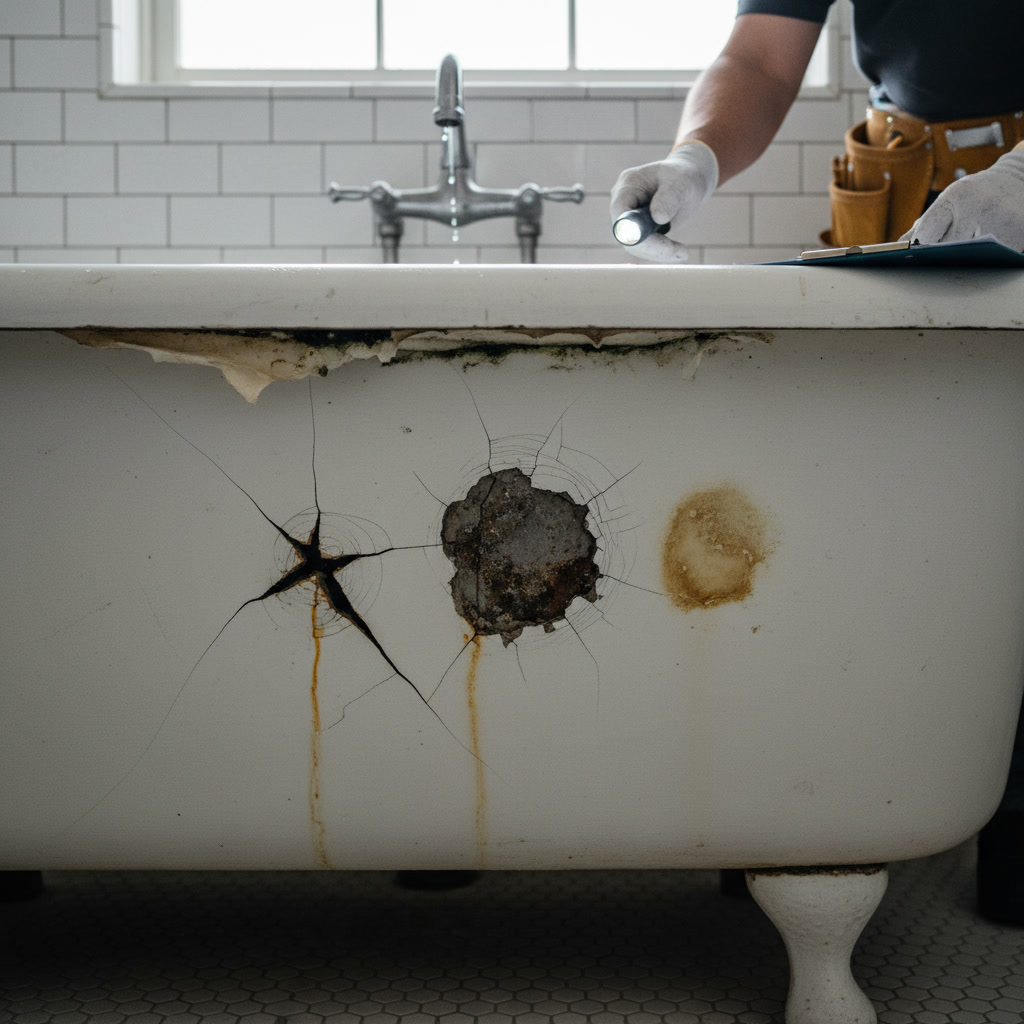
A thorough evaluation begins with visual inspection under proper lighting. The technician examines the entire surface for cracks, stress points, discoloration, and finish deterioration. They check the structural integrity by applying measured pressure to different areas, listening for flexing or movement that indicates underlying support problems.
Water testing reveals hidden leaks. The technician fills the tub and marks the waterline, then monitors for level changes over 15 to 30 minutes. They inspect the drain assembly, overflow, and surrounding areas for moisture. This step often uncovers problems that seem like surface issues but actually involve plumbing services beneath the tub.
Professional assessment includes measuring the depth and length of cracks, photographing damage for documentation, and testing the existing finish adhesion. These details determine whether repair, refinishing, or replacement offers the best value. Similar to comprehensive home plumbing inspections, a proper tub evaluation leaves nothing to chance.
Preparing the Bathtub Surface for Repair Work
Surface preparation accounts for roughly 60% of repair success. The technician starts by thoroughly cleaning the entire tub with specialized degreasers that remove soap scum, body oils, and mineral deposits. Standard bathroom cleaners leave residues that prevent proper adhesion, so professional-grade products are essential.
After cleaning, the damaged area receives focused attention. Cracks are widened slightly using rotary tools to create a clean edge for filler material. Chips are beveled at the edges to provide mechanical grip. The technician then sands the surrounding area with progressively finer grits, typically starting at 220 and finishing at 400 or higher.
Chemical etching follows mechanical preparation. An acidic solution microscopically roughens the glossy finish, creating optimal conditions for bonding. The entire tub is then wiped with denatured alcohol or acetone to remove every trace of dust, oil, and moisture. Proper ventilation during this phase protects both the technician and prevents fume buildup in enclosed bathrooms.
Step-by-Step Execution of Bathtub Repairs in Lynwood
The actual repair begins with filling cracks and chips using two-part epoxy or polyester resin formulated for bathtub applications. The technician mixes these compounds in precise ratios and applies them in thin layers, allowing each to partially cure before adding the next. This builds strength and prevents shrinkage that creates new gaps.
For surface refinishing, the technician applies a bonding agent primer that chemically links the old surface to the new coating. Once the primer flashes off, typically after 10 to 15 minutes, they spray multiple thin coats of urethane or acrylic finish. Professional equipment delivers an even, factory-like appearance that brushing or rolling cannot match.
Each coat requires specific drying time based on temperature and humidity. Rushing this phase causes orange peel texture, runs, or adhesion failure. Between coats, the technician lightly sands any imperfections and removes dust with tack cloths. The final coat receives no sanding, preserving its smooth, glossy finish.
Specialized Techniques for Different Tub Materials
Porcelain-enameled steel tubs require high-temperature resistant fillers because the surface expands and contracts more than fiberglass. Technicians use epoxies rated for thermal cycling and apply them in thinner layers to maintain flexibility. Fiberglass and acrylic tubs need more flexible repair compounds that move with the substrate without cracking.
Cast iron tubs present unique challenges. Their weight and rigidity mean cracks often indicate foundation settling or inadequate floor support. Repairing the surface without addressing structural issues leads to repeated failure. Experienced professionals assess the entire installation, not just the visible damage.
Cultured marble and composite tubs use gel-coat finishes that require color-matching expertise. The technician mixes pigments to precisely match the existing shade, testing on an inconspicuous area before proceeding. This attention to detail ensures invisible repairs that blend seamlessly with the original surface.
Quality Checks Performed Before Completion
After the final coat cures for the manufacturer-specified time, usually two to four hours, the technician inspects every inch under bright light from multiple angles. They look for thin spots, texture inconsistencies, dust particles, or any imperfection that affects appearance or durability.
A hardness test verifies proper curing. The technician gently presses a fingernail into an inconspicuous area to confirm the finish has achieved full hardness. They also check adhesion by applying and removing low-tack tape, ensuring the coating bonds firmly to the substrate.
Water testing confirms leak repairs worked. The technician fills the tub and monitors all repair areas for 30 minutes, checking underneath when access allows. This final verification prevents callbacks and ensures you can use your tub with confidence once the full curing period completes.
Curing Time and When You Can Use Your Tub Again
Modern bathtub coatings require a minimum curing period before exposure to water. Most professionals specify 24 to 48 hours of air drying, though some high-performance systems need up to 72 hours. Temperature and humidity significantly affect this timeline. Cool, damp conditions extend curing, while warm, dry air accelerates it.
Full hardness develops over seven to 14 days. During this period, you can use the tub for showering but should avoid baths, harsh cleaners, or abrasive scrubbing. The surface gains chemical resistance and impact strength gradually as the coating completes its molecular cross-linking process.
Technicians provide specific care instructions tailored to the products used. Following these guidelines ensures maximum durability and extends the life of your bathtub repair for years to come. Ignoring curing requirements can soften the finish, create adhesion problems, or cause premature failure.
How Professional Repairs Compare to DIY Kits
Retail repair kits offer convenience but rarely deliver professional results. The epoxies and fillers in consumer products cure softer and yellow faster than commercial-grade materials. Application methods matter tremendously. Brush-on coatings show streaks and brush marks, while professional spray equipment creates uniform coverage.
Surface preparation separates successful repairs from failures that peel within months. Homeowners typically skip the chemical etching, thorough degreasing, and proper sanding that professionals know makes the difference. Without these steps, even the best materials fail to bond properly.
Professional technicians also carry liability insurance and warranty their work. If a repair fails due to workmanship issues, they return and make it right. DIY repairs offer no such protection. The time saved and results achieved usually justify the professional service cost, particularly for tubs in visible bathrooms where appearance matters.
What Affects the Longevity of Your Tub Repair
Proper maintenance extends repair life significantly. Using non-abrasive cleaners preserves the finish. Products containing bleach, ammonia, or acids gradually etch refinished surfaces and cause premature breakdown. Soft cloths or sponges prevent scratching that creates entry points for moisture.
Water quality plays an important role. Hard water deposits build up faster on repaired areas because the surface chemistry differs slightly from the original factory finish. Installing a water softener or using a squeegee after each use reduces mineral accumulation and keeps the surface smooth.
Underlying plumbing issues can undermine even perfect repair work. A slow leak from the drain assembly or faulty faucet connections introduces constant moisture that degrades adhesion from behind. Addressing these problems before or during tub repair ensures lasting results.
Getting Lasting Value from Professional Tub Restoration
Professional bathtub repair delivers quality results when performed by experienced technicians using commercial-grade materials and proven techniques. The systematic approach, from thorough assessment through proper surface preparation to careful application and curing, ensures repairs that look great and last for years. Understanding each phase helps you recognize quality work and maintain your investment.
Cisco Plumbing INC brings more than 20 years of experience to every repair, combining technical expertise with attention to detail that protects your home and budget. Whether you face minor chips or extensive surface damage, professional assessment identifies the right solution and executes it correctly the first time.
If your bathtub shows signs of damage or you need expert evaluation of existing problems, professional help is just a phone call away. Contact our team at +14242271819 to schedule an assessment and restore your bathtub to like-new condition with repairs that stand the test of time.