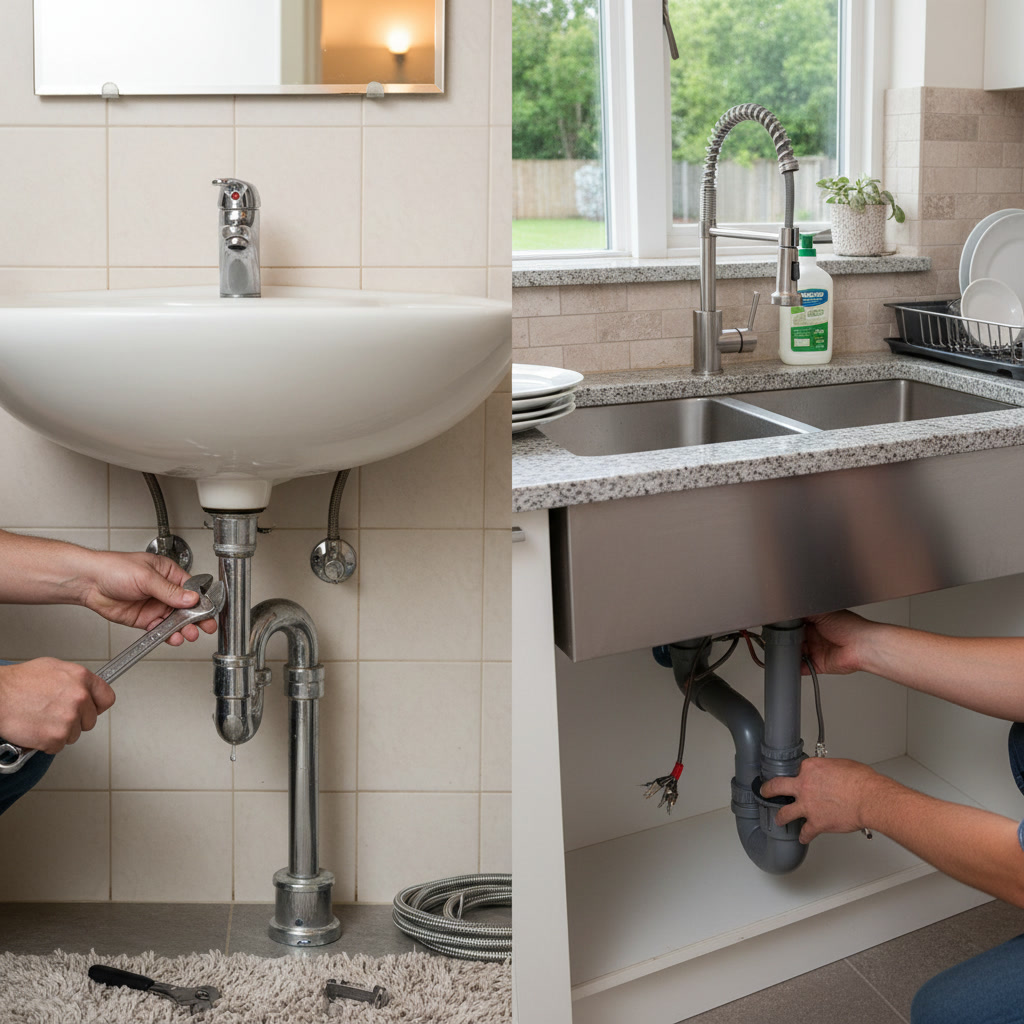
Not all sink repairs are the same. The location of your fixture determines the tools, techniques, and expertise needed to restore proper function. Understanding the sink repair differences between bathroom and kitchen fixtures helps you know what to expect when problems arise and why a qualified plumber approaches each job with distinct strategies tailored to the specific environment.
Why Fixture Location Matters in Plumbing Repairs
The physical placement of a sink dictates access points, available workspace, pipe configurations, and the types of stress the fixture endures daily. A bathroom vanity sink sits in a compact cabinet space with limited elbow room, while a kitchen sink occupies a high-traffic area subjected to grease, food debris, and heavy use throughout the day.
These environmental factors shape how plumbers diagnose problems, select replacement parts, and execute repairs. The same clog or leak requires different approaches depending on whether you find it under a pedestal sink in a powder room or beneath a double-basin kitchen sink with a garbage disposal.
Common Problems in Bathroom Sink Repairs
Bathroom sinks typically face challenges related to cosmetic products, hair accumulation, and toothpaste residue. Pop-up drain assemblies corrode faster in bathroom environments due to constant exposure to soap scum and hair oils. The small diameter of bathroom drain lines, usually 1.25 to 1.5 inches, means even minor buildup can create significant flow restrictions.
Bathroom faucets often develop leaks at the base or handle because they receive frequent use for washing hands, brushing teeth, and other grooming tasks. Water pressure fluctuations during shower use in adjacent plumbing can stress bathroom sink supply lines, leading to loose connections over time.
What Makes Kitchen Sink Repairs Unique
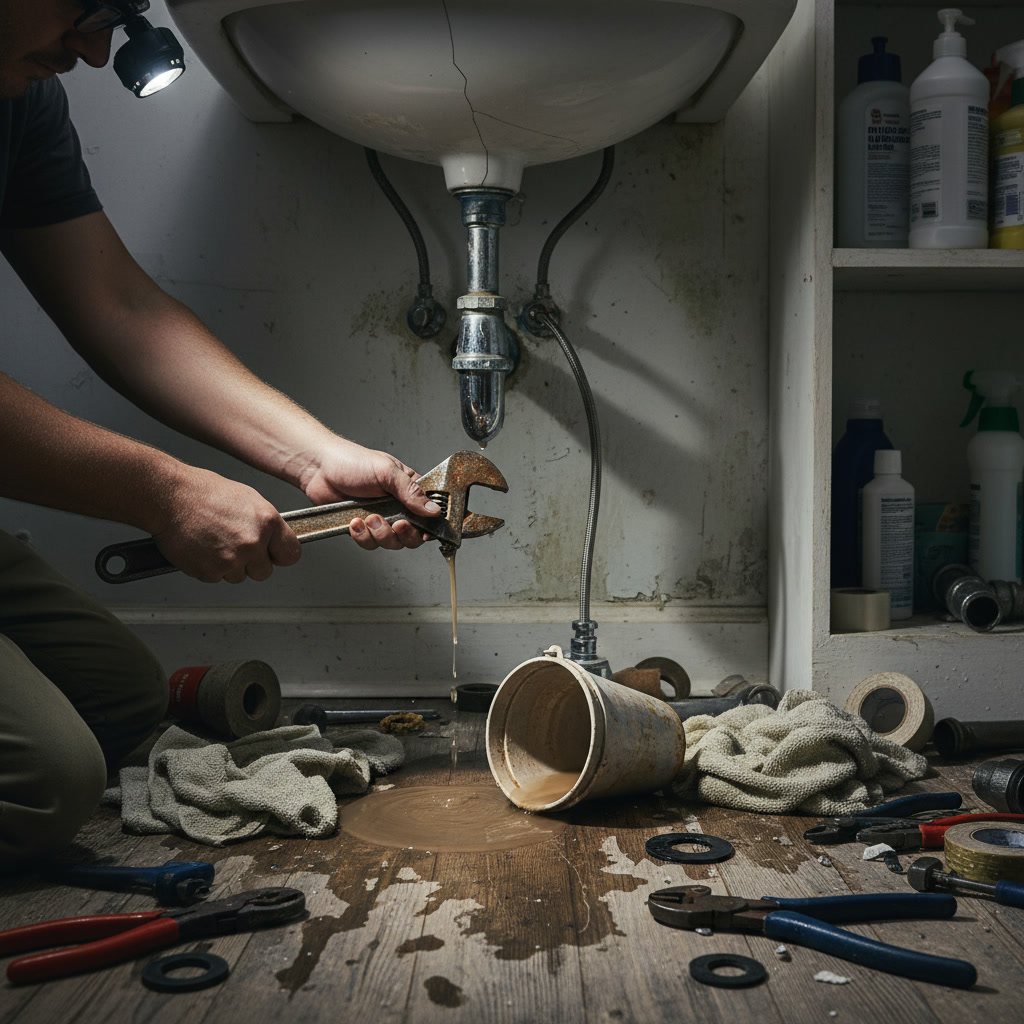
Kitchen sinks handle a fundamentally different workload. They process food waste, grease, hot water in large volumes, and mechanical stress from garbage disposals. The drain system diameter measures 1.5 to 2 inches to accommodate food particles, and many kitchen setups include dual basins with complex trap configurations.
Grease buildup represents the primary enemy of kitchen drain health. Even with careful practices, oils solidify inside pipes as they cool, gradually narrowing the passage until water backs up. This issue rarely affects bathroom sinks but dominates kitchen drain cleaning calls.
Kitchen faucets feature pull-down or pull-out sprayers with internal hoses that wear differently than fixed bathroom spouts. The connection points for these moving parts become failure points after years of daily meal preparation and dish washing.
Access and Workspace Challenges in Lynwood Homes
Older homes throughout Lynwood often feature undersized vanity cabinets and limited access to shut-off valves beneath bathroom sinks. Pedestal sinks offer virtually no storage and force plumbers to work in cramped positions with minimal tool clearance. Working on a bathroom sink in these conditions requires specialized compact wrenches and flexible supply lines.
Kitchen cabinets provide more workspace but introduce different obstacles. Large garbage disposals, hot water dispensers, and complex pipe runs fill the cabinet area. Removing these components to access the sink basin or drain assembly adds time and complexity that bathroom repairs rarely require.
Pipe Configuration Differences Between Locations
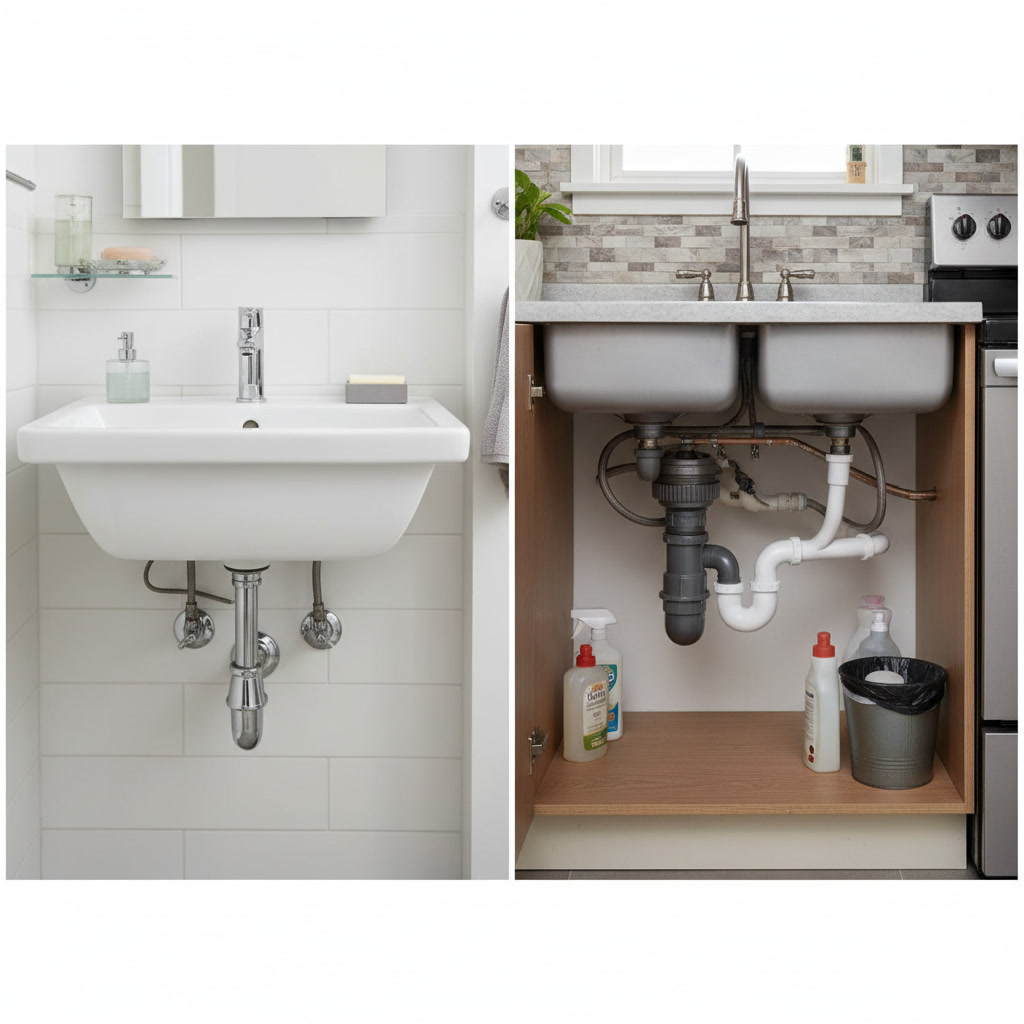
Bathroom sinks typically connect to simple P-traps with minimal horizontal runs before reaching the wall drain. This straightforward configuration makes diagnosing drain problems easier because fewer connection points exist where leaks or clogs can develop.
Kitchen sinks often feature extended horizontal drain runs connecting to island vents, dishwasher drain lines, and garbage disposal discharge pipes. The additional connections create more potential failure points and require thorough inspection during sink repair work to identify the true source of leaks or slow drainage.
Material and Finish Considerations by Room
Bathroom sinks frequently use porcelain, vitreous china, or decorative vessel materials that require gentle handling during repairs. Overtightening drain flanges or basket strainers can crack these delicate materials, turning a simple repair into an expensive fixture replacement.
Kitchen sinks lean toward stainless steel, composite granite, or heavy-duty porcelain designed to withstand impacts from pots and pans. These durable materials tolerate more aggressive repair techniques but demand specific tools to avoid scratching visible surfaces. A plumber working on a high-end composite sink uses different protective measures than when repairing a standard bathroom vanity.
Four Key Technical Differences Professional Plumbers Address
First, drain stopper mechanisms vary by location. Bathroom sinks use pop-up assemblies with lift rods and pivot rods that require adjustment and periodic replacement. Kitchen sinks rely on basket strainer assemblies that screw into the drain opening and seal with plumber’s putty or silicone.
Second, supply line pressure differs. Kitchen faucets often require higher flow rates to fill large pots quickly, placing different demands on supply valves and connections. Bathroom faucets prioritize controlled flow for washing and water conservation.
Third, venting requirements change based on fixture placement and local code. Island kitchen sinks need special venting solutions like air admittance valves or extended vent runs. Bathroom sinks in exterior walls connect to simpler vent stacks with fewer complications.
Fourth, water temperature exposure varies dramatically. Kitchen sinks regularly receive boiling water that can degrade rubber washers and seals faster than the warm water typical in bathroom use. This temperature stress accelerates wear on faucet components and requires more frequent maintenance in kitchen applications.
Diagnostic Approaches for Each Sink Type
Diagnosing bathroom sink problems starts with inspecting the pop-up assembly and overflow drain. Plumbers check for hair clogs in the trap and verify that the pivot rod moves freely without binding. Leak diagnosis focuses on compression fittings at supply lines and potential cracks in porcelain basins near drain openings.
Kitchen sink diagnosis requires testing garbage disposal function, checking dishwasher drain connections, and inspecting the entire drain assembly for grease accumulation. Plumbers often run water in both basins simultaneously to observe drainage patterns and identify partial clogs that only appear under heavy flow conditions. This multi-basin testing rarely applies to bathroom sinks.

Repair Timeline and Complexity Factors
Simple bathroom sink repairs like replacing a pop-up assembly or fixing a dripping faucet typically complete within one to two hours. The straightforward access and uncomplicated plumbing allow for quick diagnostics and parts replacement.
Kitchen sink repairs involving garbage disposal removal, dual drain configurations, or supply line replacement for pull-down faucets often require three to four hours. The additional components and potential for unexpected complications like corroded mounting hardware extend the timeline beyond basic bathroom work.
Major repairs like replacing a cracked basin or addressing slab leak connections beneath either sink type escalate complexity significantly. These situations may require cutting drywall, accessing floor joists, or coordinating with other trades, regardless of whether the fixture sits in a bathroom or kitchen.
When DIY Attempts Create Bigger Problems
Homeowners attempting bathroom sink repairs often overtighten compression nuts on supply lines, crushing the ferrule and creating leaks that only appear after walls are closed up. The confined workspace makes it difficult to achieve proper torque without the right tools.
Kitchen sink DIY disasters frequently involve improper garbage disposal installation, reversed hot and cold lines on single-handle faucets, or inadequate sealing of basket strainers that leak slowly into cabinet floors. The complexity of kitchen plumbing systems creates more opportunities for mistakes that compromise multiple fixtures simultaneously.
Professional plumbers recognize these patterns immediately because they address the aftermath regularly. The expert insight that separates experienced repair work from amateur attempts lies in understanding how seemingly minor mistakes in one area cascade into major problems throughout connected systems. For example, failing to properly support a kitchen drain pipe can stress the bathroom drain line that shares the same vent stack, creating issues in both locations from a single installation error.
Choosing the Right Repair Strategy for Your Home
Understanding these fundamental differences helps you communicate effectively with your plumber and set realistic expectations for repair timelines and costs. A bathroom faucet drip may need only a washer replacement, while a similar drip in your kitchen pull-down faucet might require cartridge replacement or hose connection repair.
When you notice slow drainage, identify which sink type is affected before scheduling service. Bathroom clogs often respond to simple mechanical removal of hair and soap buildup, while kitchen clogs may require professional plumbing services with specialized equipment to cut through grease deposits.
Knowing whether your repair falls into the bathroom or kitchen category helps Cisco Plumbing INC arrive with the right tools, parts, and time allocated to complete your repair efficiently on the first visit. This preparation reduces delays and ensures quality results that address the specific challenges your fixture location presents.
Whether you face a bathroom vanity leak or a kitchen basin backup, Cisco Plumbing INC brings over 20 years of experience diagnosing and repairing both fixture types throughout the greater Compton area. Our team understands how location-specific factors affect repair approaches and delivers solutions tailored to your exact situation. Contact us at +14242271819 to schedule an appointment and get your sink functioning properly again.